
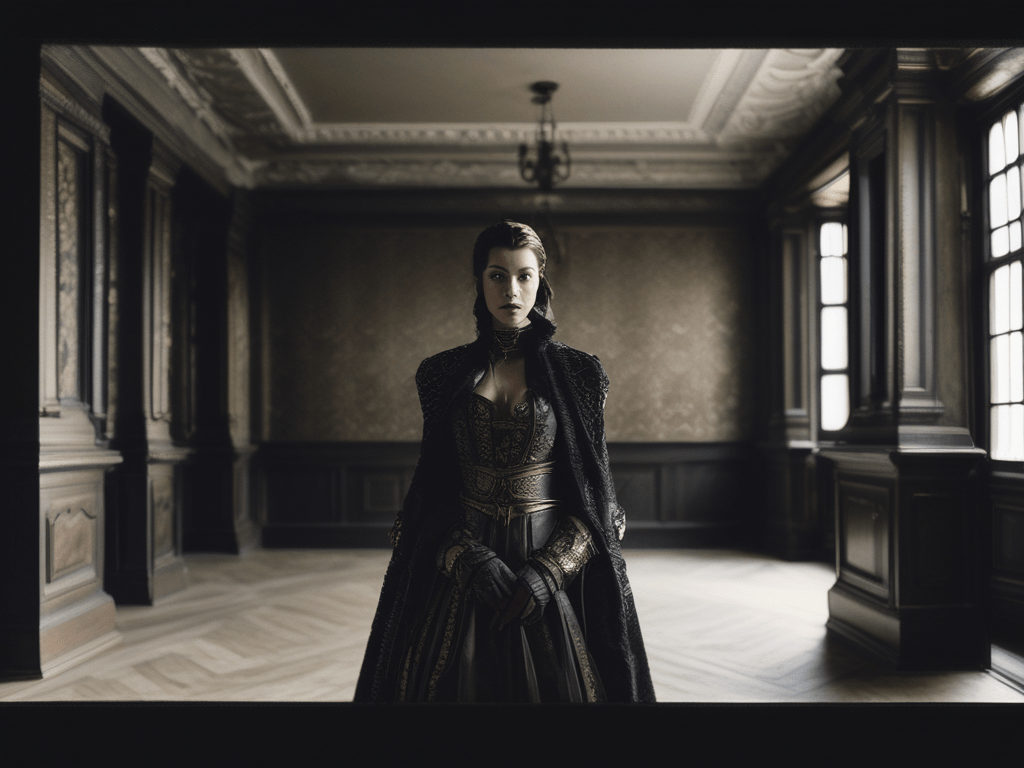
There is something strangely reassuring about Gaumont productions. I first encountered them in the 90s while living in Nanterre. It was my first time being exposed to French cinema in such a strong way, the historical context, the trade values of men and women, and the theme of strength vs. sensuality. It was quite idiosyncratic then and just more so now.
TRosealies life is one on the market. To start with forced marriage and to end with passionate sacrifice is one we have seen in the tale as old as time. But the twist in Beauty and the Beast is more than a gender role. Once she embraces herself, she moves and challenges society with a great deal of self and agency. The turmoil of who is in control within her relationship with Abel and the give and take between them. Between being a phenom and a novelty. The rapport between church and state. And the way she ultimately expresses that her beauty has to be accepted in total, and not in editorialised photoshop of q world, is a damning sense of the changes in polite and working society at the time.
However, we see her following very traditional values. She is a penitent wife in her own way, desperate for children and being a home carer, an aide and advisor, and a positive example to the other women around her. It’s an enjoyable and bittersweet drama. Ultimately, the church and state are never really challenged; they are just co-opted, and revolution takes place.
It’s a fun, darkly passionate costume drama for Bronte fans and many others. And it’s filmed gorgeously with scenery and a slightly mesmeric gothic flower. But it’s not one for everyone. It was a fun return to my days as a home Parisian, complete with the affectations and pretensions of a film major that implies. But it does not move the needle in any way beyond the likes of Cyrano et al. and I, doubt it’s meant to
So, one for a matinee easily
 The Irish Indian Times.
Leave a comment