

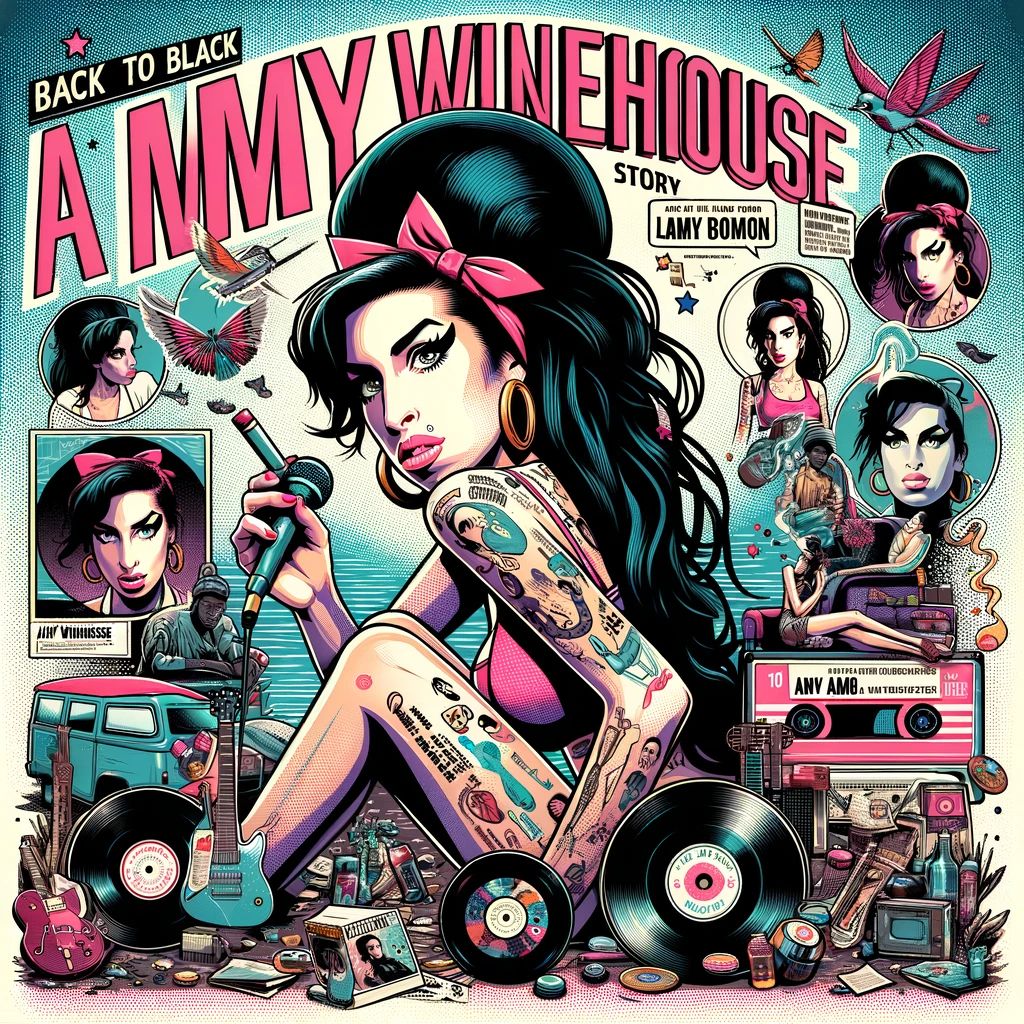
Back to black, the Amy Winehouse story
Mum was a big fan. I just saw the big telly stuff. I bought her the albums from very early on. I was pretty dismissive at the time, I only heard about Amy second-hand, and it was through the car crash porn of the tabloids. I felt better off without her and Pete Doherty and the other folks I saw at the time as living a life of excess without consequence. Amy died at 27 in 2011; I was 35ish at the time.
This film is something that makes me feel 50. It reminds me how ageless her work was even then, how she fitted in with being a misfit. The rediscovery of the old songs and the need to escape into some sort of hedonism many needed. How she could swap the young lust of the men, the heads of the girls and the hearts of people like my mum. The film swings and saunters with sheer bravado and charm on that front
I can’t find any spoilers for a person born and died within my lifetime. The media, being what it was, seems relatively subdued in the film. It has a first half that is great for the hyper-stylised micro nostalgia, the family and the glib asides of working-class Jewish families and, by extension, the wry of Camden life. I doubt I’m the first person to remember getting a snog or vomming on his shoes outside the Dublin castle after seeing the batty lemmings from hell, £5.
But aside from the big cameras focusing on how one could smoke in pubs back then, it seems to derail in its portrayal of her derailment; by all means, from the meet-cute to the breakup, you see a comfortable British rom-com from the time, like a weird Simon Pegg vehicle that never quite make it or if tim burton needed the cash and directed matha, meet amt, daniel or Lawrence. You know the ones. She’s cooky because she wears flats and a fluffy jumper, but ten minutes later, she’s crying into her wonder bra while eating Hagen Daas, and that is where it goes disturbing.
I talked with a friend, Richard, who hates docudramas, over a burger last week. He feels they spoon-feed the audience too much and devalue the tragedies, discomfort, and abuse they almost inevitably cover and dramatise. I said at the time that the sad thing is people need a narrative to understand what’s happened. But the descent into a weird Wayne and Waynetta slob win on a scratch card life put in front of us after she marries Blake makes me see his point more clearly.
There is a particular conjecture about how much she wanted a baby. There are no women, no friends, just her grandma, and her mother is barely there. It works in portraying a woman alone, but it also makes me feel there is a story of the studios and opportunities and how they control their talent. But is it that not the story they want to tell,
It seems to course correct to a degree, but every revelation still comes from fixing up because of a man, the same man who got her into drugs; I know there have been shows with her parents, and I’ve not watched them. Eddie Marsen is a great dad in this, but the problem is that all the carrying cabbing up the Camden lock in the first halfcannoto evolves into the car crash of her life in the second. It’s borderline povvo porn and left me with an ill taste.
It’s a mixed bag, I feel. For the tragedy, a sanitised story would be what was wanted. It’s there in her own words from drama school to offer people a real escape.
And my last thoughts. For a film about a young man who died younger than I was when I first heard about her, Nick Cave should not be on the end credits. She was a woman, not a muse,
 The Irish Indian Times.
Leave a comment